The Glénan narcissus at the origin of the national nature reserve
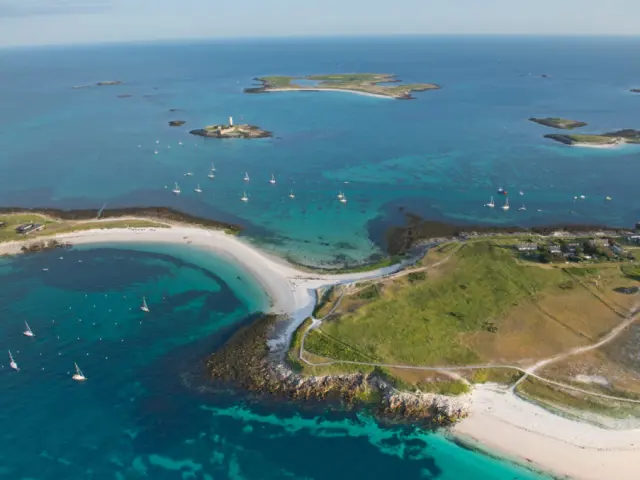
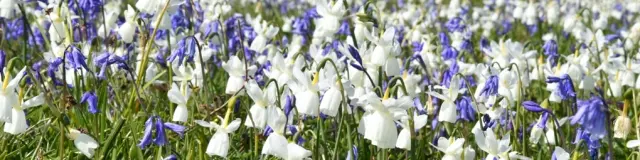
The island of Saint-Nicolas des Glénan is a national nature reserve managed by Bretagne Vivante. The island became a reserve in 1974, in order to protect the Narcisse des Glénan. This endemic species can only be seen on the island of Saint-Nicolas. This flower blooms in April. Every 5 years, the nature reserve team carries out a unit count (plant by plant) to ensure that this species is thriving. In 2021, 260,000 Glénan Narcissus plants were counted.
No fewer than 140 species of bird are regularly observed!
The archipelago is also a transition zone for migratory birds, which make the islands their nesting grounds. This is particularly true of the Ring-necked Plover, which lays its eggs on the top of the beaches. These eggs blend in with the sand in such a way that they are often trampled underfoot. This bird can be found on most of Brittany’s beaches, and its egg-laying is often indicated by warning signs, with anti-predator cages to prevent other species from destroying the nests.
Among the threatened and protected avifauna on the archipelago are Balearic shearwaters, oystercatchers, three different species of gull and … terns! Île aux moutons, the island closest to the mainland, is home to the largest tern colony in Brittany, including three species: the caugek, common and roseate terns. The roseate tern is the most threatened, with only 26 pairs observed on the island in 2022. Nesting takes place from May to October, so it is forbidden to land on the island from 1 April to 31 August. Pairs stay together for life and lay 1 to 3 eggs, but only 25% of the young fledge, hence the nationally threatened status.
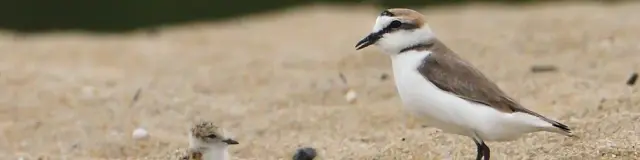
The Interrupted Collared Gravelot Sailcoop
|
The Caribbean of Brittany: the role of algae
The white colour of the Glénan sand is due to the decomposition of red calcareous algae. This is called maerl. This algae covers the seabed of the archipelago and represents an ecological niche. It supports life and provides shelter for a large number of species, as well as being a feeding and breeding ground. This area, rich in biodiversity, has long been used to fertilise soil and treat wastewater. Its extraction has been banned in France since 2010, mainly because of its low regeneration rate of 0.1 to 0.3 mm per year! It is a protected habitat at European level, like all seabed habitats.
Eelgrass is the only flowering plant in the sea. They form underwater meadows called meadows. Their rhizomes, similar to the roots of land plants, anchor themselves in the sediment. Thanks to these rhizomes, they stabilise the seabed. In addition, the leaves clarify the water by capturing suspended particles. More than 150 species can be found living in these meadows, seeking food, reproduction, shelter or a new home. These remarkable plants also fix carbon: in 1 year, 1 hectare of seagrass bed can sequester the equivalent of 6 round trips between La Rochelle and Rome! (Ifremer, 2010)
Extensive marine flora and fauna
The waters around Les Glénan are a hotspot of biodiversity, inhabited by a host of remarkable species. Grey seals in particular can be observed on resting places such as rocky reefs, which are present in large numbers in the archipelago. Common dolphins are frequently seen, moving in groups to hunt or following the path of boats. In spring, basking sharks can be seen, the 2nd largest fish in the world. They swim with their mouths open to capture their prey.